

Measure the shape, not just the longest edges
For a rectangle, multiply length by width to calculate the area in square metres. For example, 6 m × 4 m is 24 m². For an L-shaped lawn, divide it into rectangles and add their areas.
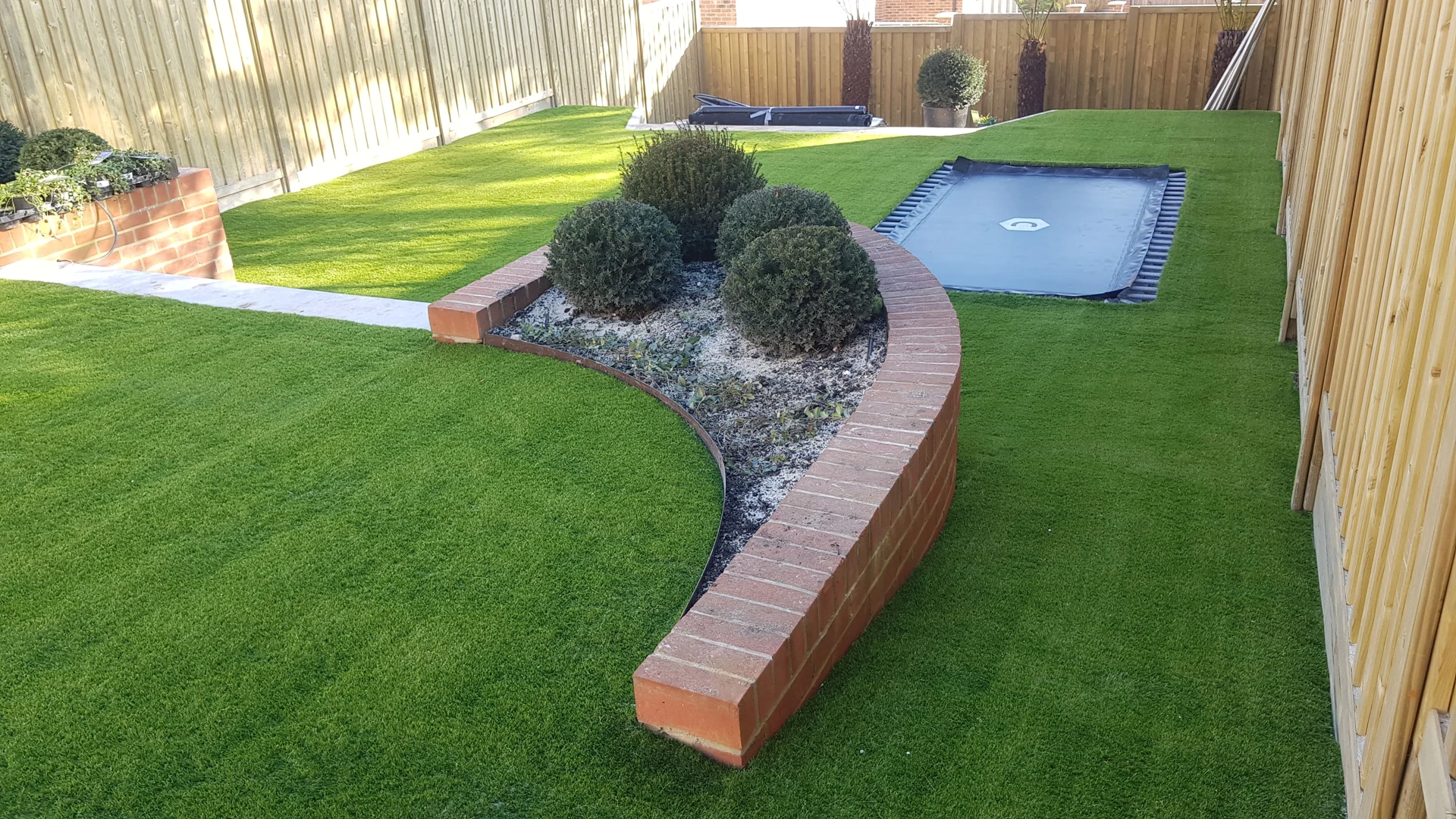
For curves, irregular boundaries, trees or planting beds, make a sketch and note the dimensions. Measurements give a starting point; an installation survey confirms the layout and the work required.
Area is not always the same as order quantity
Grass is supplied in rolls. The roll layout, pile direction, joins and offcuts affect how much material is needed. Ordering exactly the calculated garden area can leave you short.
Do not assume that pieces can be rotated in any direction without a visible difference. A considered layout may use more material to keep pile direction consistent and reduce awkward joins.
Prepare for your survey
Think about access from the road to the garden, old materials to be removed, lawn edges and any other work you want. Tell us about existing surfaces, raised beds and access covers that affect the lawn; the quotation confirms the grass preparation, drainage and edging included.
For supply-only purchases, confirm the roll layout and order requirements with the supplier. For a fully installed lawn, book a Saygrass survey.