

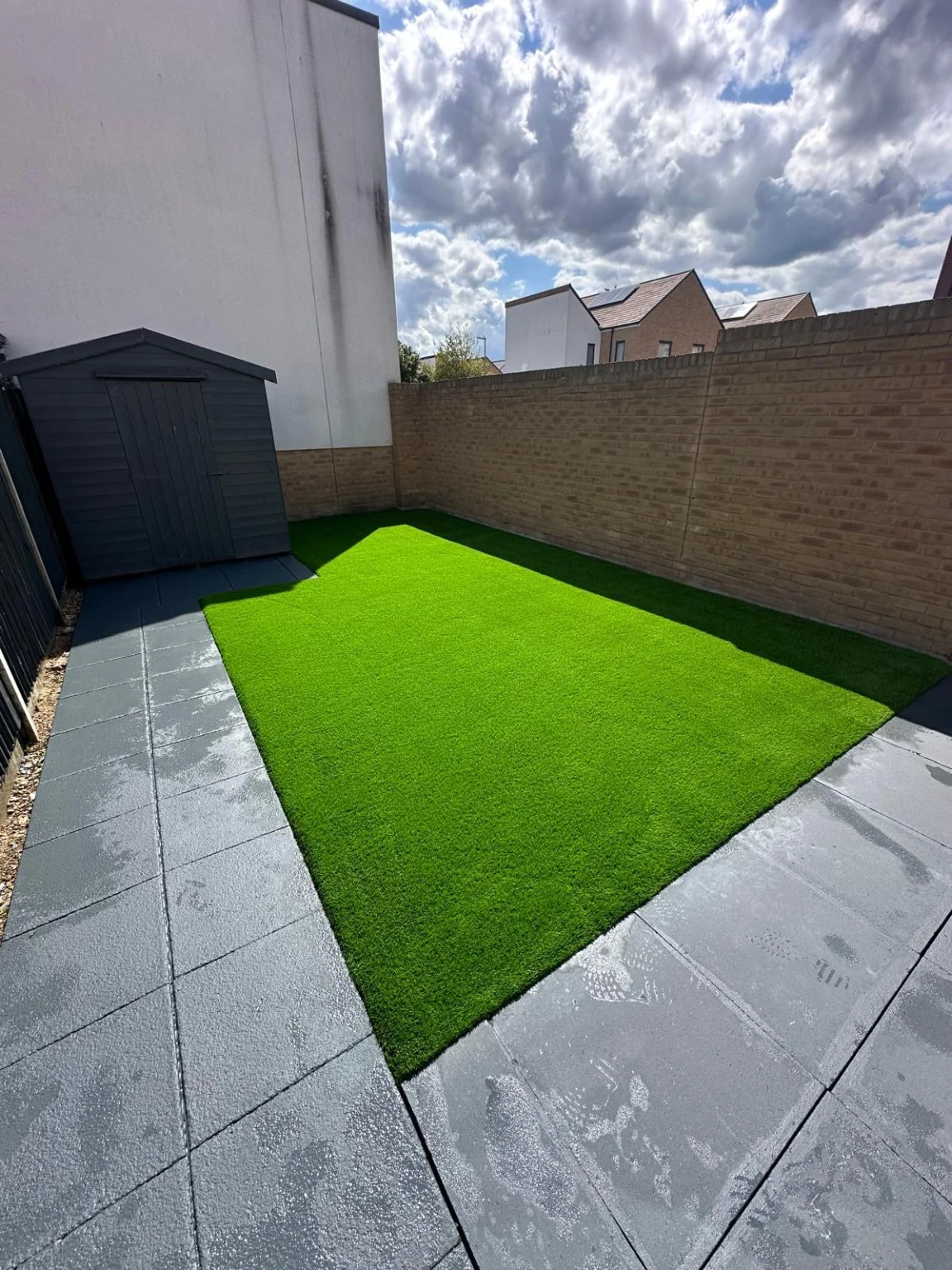
The appeal of an artificial lawn
Artificial grass gives a consistent green appearance without routine mowing. It can make a worn garden lawn easier to use and reduce the patches of exposed soil that can be tracked indoors.
It still needs cleaning, debris removal and attention to edges and joins. The right surface depends on what you want from the garden, the site conditions and your willingness to maintain it.
Consider the trade-offs
Artificial grass is a manufactured plastic surface. It is not a living lawn and does not replace the habitat benefits of grass, flowers, soil and planting. Consider keeping planted borders or other living areas as part of the garden design.
Do not assume every product is recyclable or that disposal is available locally. Ask about the specific material and practical disposal options. We do not describe all artificial grass as environmentally friendly.
Heat, drainage and surface choice
Artificial grass can become hot in sunshine. Keep barbecues, fire pits and other hot items away, and be alert to concentrated sunlight reflected by glazing.
Drainage depends on the product, installation and underlying conditions. A permeable grass backing cannot by itself correct a site that has inadequate drainage or a poorly prepared base.
Ask about the specific product
If you need material information, testing or certificates, ask for evidence for the grass and complete system being quoted. Do not assume that every synthetic grass product has the same composition, performance or approvals.
Compare the detail
Request samples, discuss the intended use and compare quotations on the same scope. If you decide to proceed, the chosen grass, base, edging and any drainage work should be clear in the quotation. Read our installation cost guide before comparing prices.