

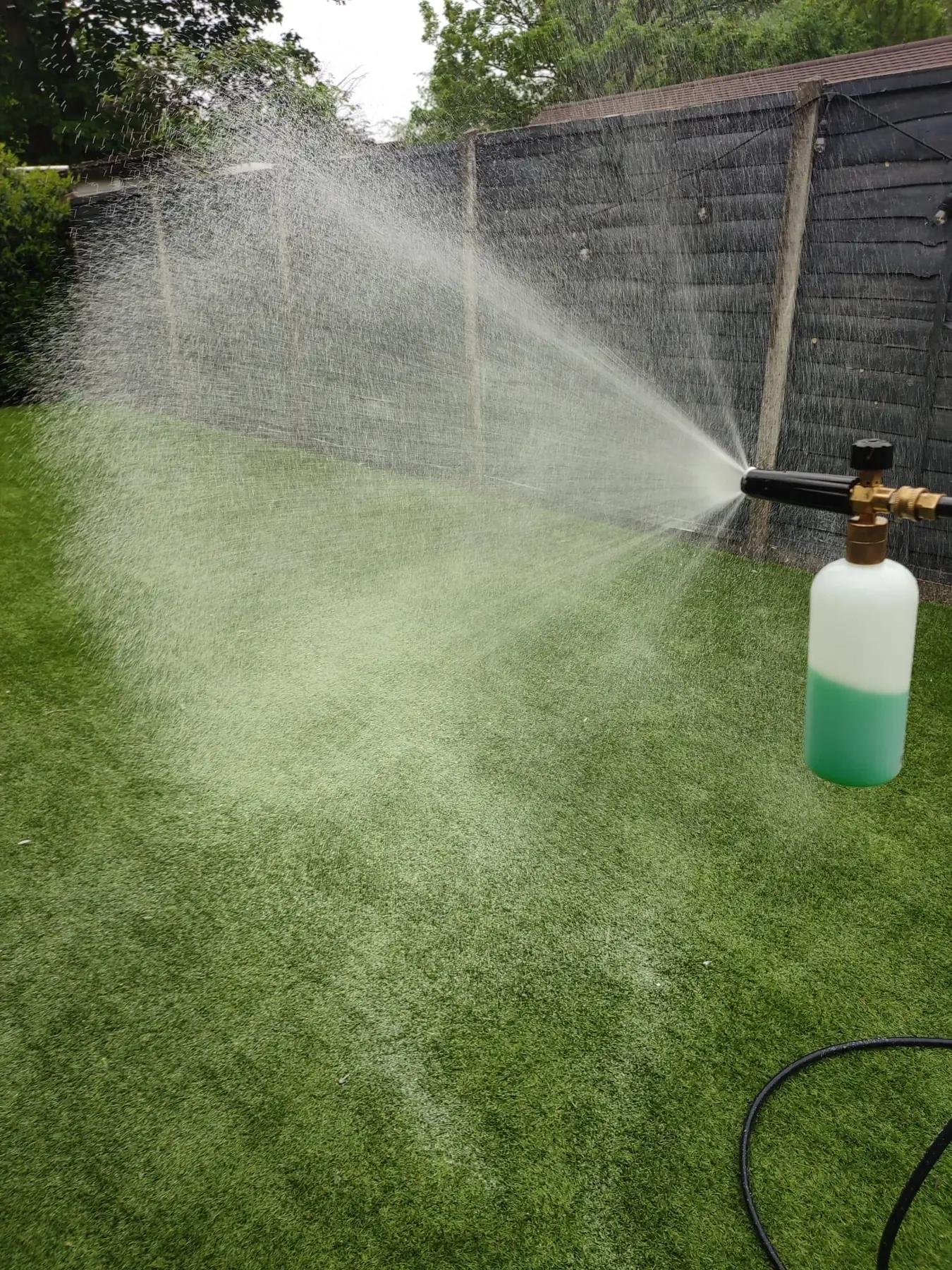
How to clean artificial grass: a practical sequence
Start by looking for loose edges, open joins or damage and avoid working over those areas until they have been assessed. Collect solid pet waste, then lift leaves and loose debris with equipment suitable for the installed grass. Work gently around seams and boundaries rather than forcing debris into the pile.
For spills, lift or blot the material promptly and follow the grass supplier’s cleaning instructions. Check that a proposed cleaner is suitable for the fibres, backing and joints, and test an inconspicuous area. Brush with a compatible non-metal brush as directed for your grass. There is no universal chemical mix or pressure-washer setting for every lawn.
Choose the right answer for a recurring problem
A routine clean is different from treating moss, investigating recurring weeds or tracing dog urine odours. If water repeatedly remains on the lawn, use the drainage guide before adding more water.
For professional cleaning, send the lawn size, address and photographs through our maintenance enquiry. Mention previous treatments and any damage. We quote from that information without an installation survey; work on seams or the base is assessed separately.
How long can a well-maintained lawn last?
With the right maintenance and care, our artificial grass can last around 25 years or more, depending on how each garden is used, site conditions and wear. This is a possible lifespan, not a guaranteed service life or an extension of the 15-year UV warranty.
Keep debris off the surface
Remove fallen leaves and other loose debris before they collect in the pile and along the edges. Use equipment and methods suitable for your grass, following the product’s care guidance.
Brush as appropriate to help the fibres stand up. Avoid excessive force on joins or loose edges, and report damage before using powered equipment over it.
Pets and cleaning
Clear solid waste promptly and keep the lawn clean using suitable products and methods. Our professional maintenance service includes jet washing, power brushing and pet-safe shampoo; optional deodorising can be discussed.
Odours may come from material below the grass as well as the visible surface. On old sand bases, cleaning may not resolve the source completely. We cannot promise complete odour removal without assessing the site.
Know when cleaning is not enough
Open joins, burns, permanent crushing and base settlement need assessment. Brushing will not repair melted fibres, and cleaning cannot restore a failed base.
Keep hot items away from the lawn and be aware of concentrated reflections from glazing or reflective objects. If you see an unusual hot spot or damage, contact us before using the area further.
Autumn leaves and freezing weather
Read our winter artificial grass care guide for fallen leaves, frost, ice and when recurring puddles need assessment.
Arrange a maintenance assessment
Email photos, an approximate size and the address to discuss an artificial grass maintenance visit. No installation survey is needed for this initial assessment. Read about our maintenance service.